Father Alexander Anderson (Japanese: アレクサンド・アンデルセン神父, Hepburn: Arekusando Anderusen Shinpu?; IPA: [aɾeksando andeɾɯseɴ]) was the fanatical leader of the Armed Priest Vanguard and the trump card of the Vatican's Section XIII, Iscariot.
A warrior and expert vampire hunter belonging to the Vatican's Iscariot Agency, Anderson was a devout Catholic with the intent to kill what he considered enemies of God. Suitably, his body was genetically modified to be a "Regenerator," a superhuman able to fight supernatural creatures. Viewing himself as the sole and absolute representative of God on earth, he fiercely opposed the Protestant Hellsing Agency, particularly the vampire Alucard.
Contrasting his role as the Vatican's special exterminator, Anderson worked in a personally driven orphanage operating in Italy outside Vatican City as a warmhearted caretaker. Those he cared for greatly admire him; he treated his orphans with notable gentleness, a stark contrast to his savagery against his enemies. Managing two opposite extremes in his personality was perhaps Anderson's "madness."
Character Data
Appearance
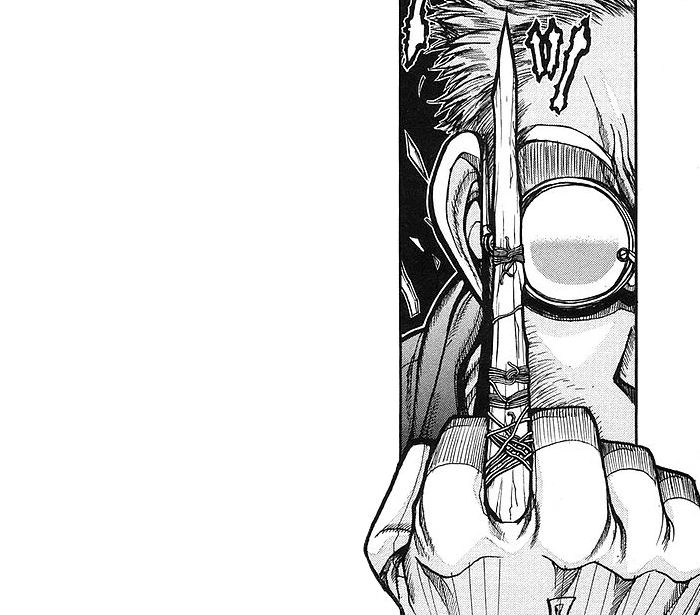
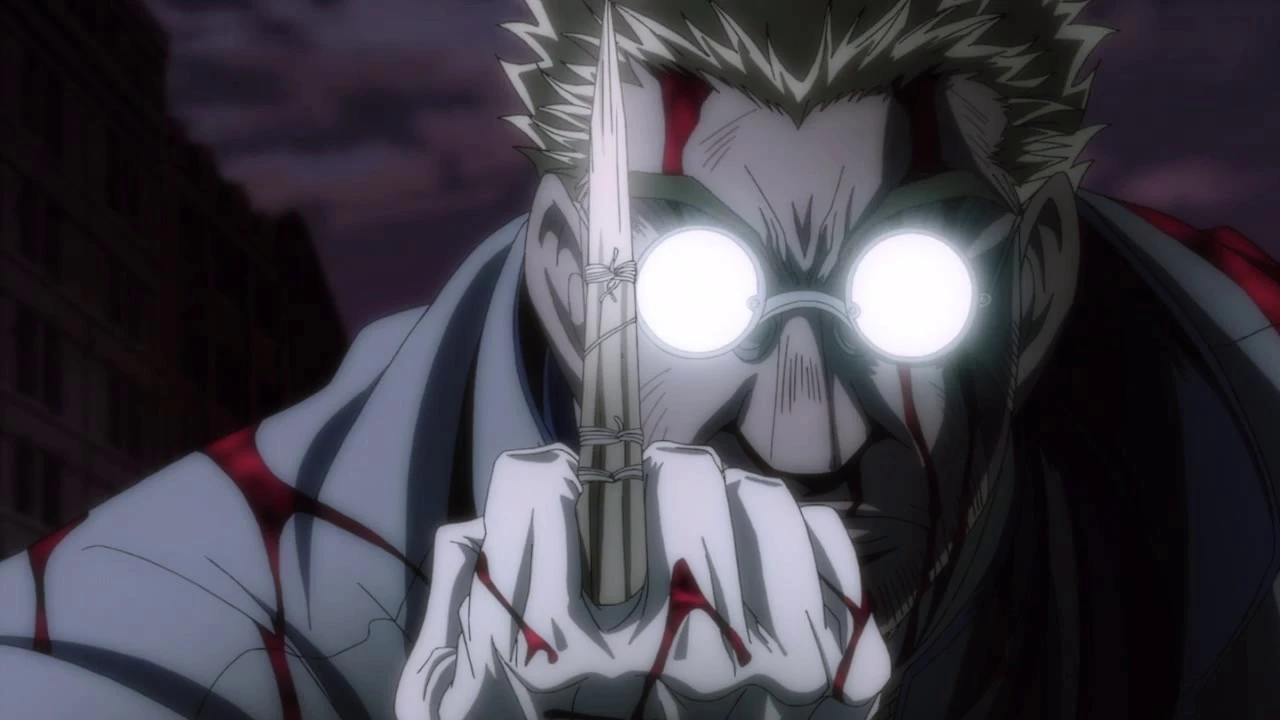
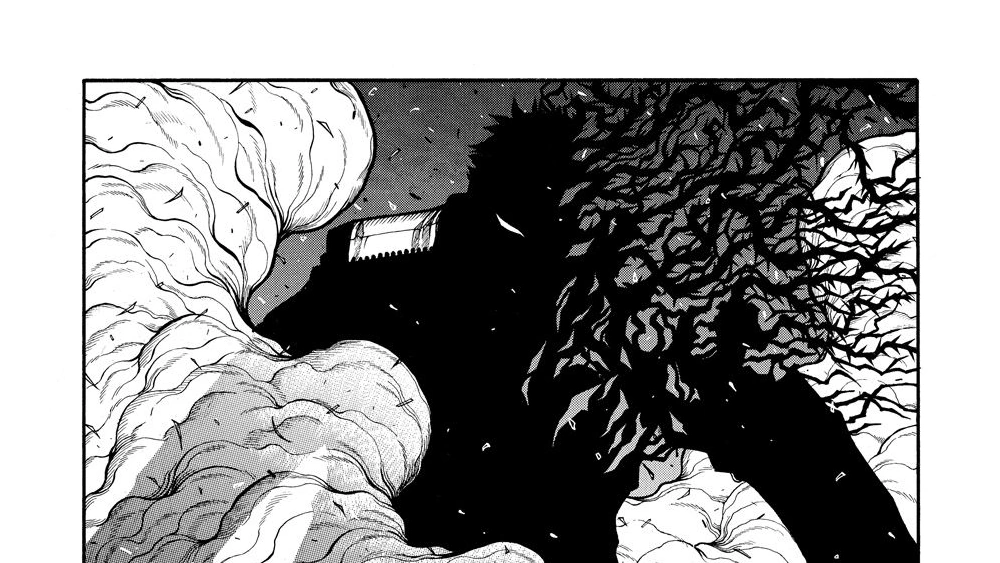

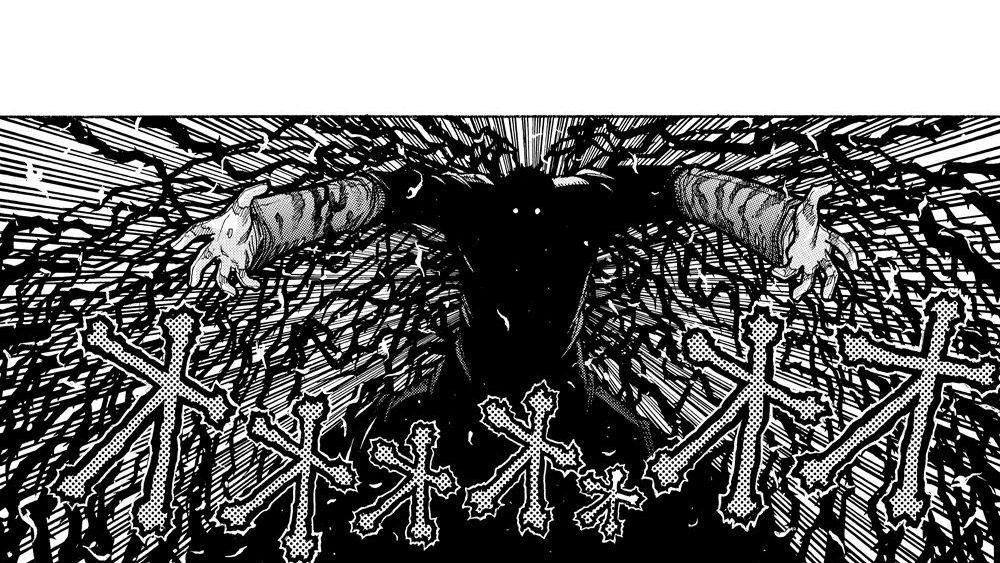

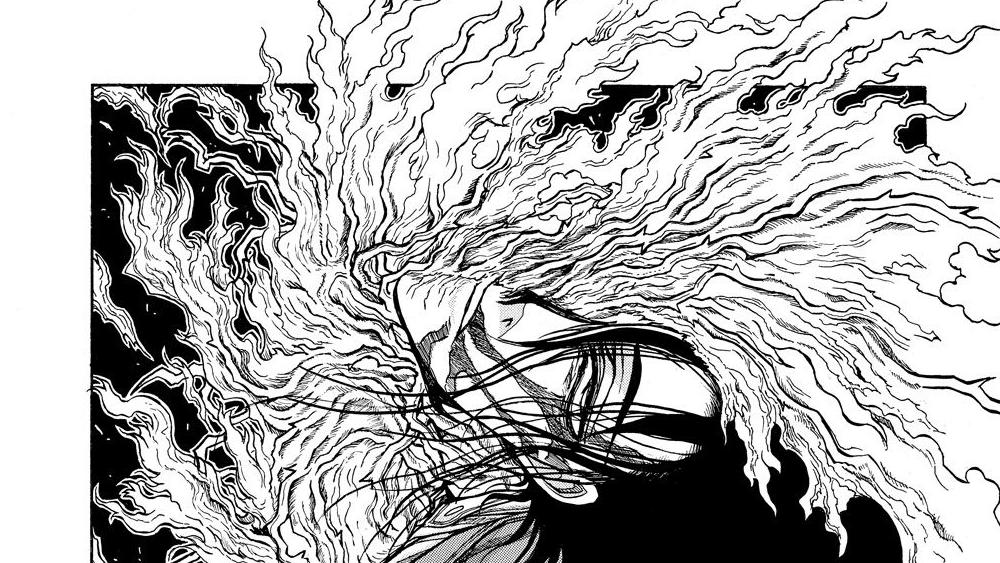
Alexander Anderson was depicted as a tall and imposing, middle-aged man, reclined with ample, extremely high shoulders, comparatively taller than or as high as Alucard. Anderson had short, spiky silver-colored hair, light blue eyes, tanned skin, a defined squared jaw, and light facial hair.[b][21] In addition, there was an extensive, wedge-like scar on his left cheek. When he stabbed himself with the Holy Nail of Helena, Anderson's body became immolated by green thorns, akin to the crown of thorns worn by Jesus Christ.[21]
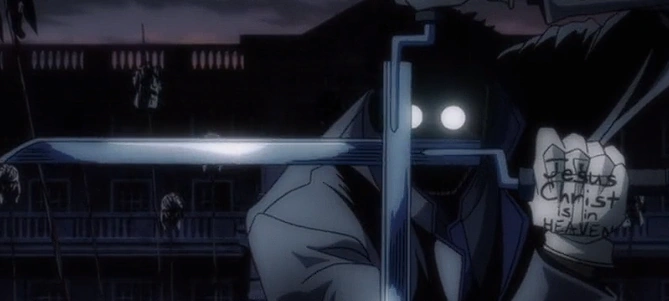
His attire included round, wire-rimmed glasses, a lengthy gray cassock overcoat over a matching gray cassock with a clerical collar, a long silver cross necklace, gray trousers with a pair of black boots, and white gloves.[c][21] On his gloves, there were inscriptions written across the crosses drawn on the back; the right hand said, "Jesus Christ is in Heaven," while the left hand said, "Speak with Dead." Later, it changed to "Iscariot Section XIII."[d]


Personality
We are God's representatives, earthly agents of divine punishment. Our mission is to destroy down to the last little bit those fools who would oppose our God. Amen. (我らは 神の代理人 神罰の 地上代行者 我らが使命は 我が神に逆らう 愚者を その肉の 最後の一片までも 絶滅すること―― Amen) (Warera wa kami no dairinin. Shinbatsu no chijō daikōsha. Warera ga shimei wa, waga kami ni sakarau gusha o, sono niku no saigo no ippen made mo zetsumetsu suru koto... Eimen.)
—Alexander Anderson, to Alucard (Order 04: Sword Dancer (1))
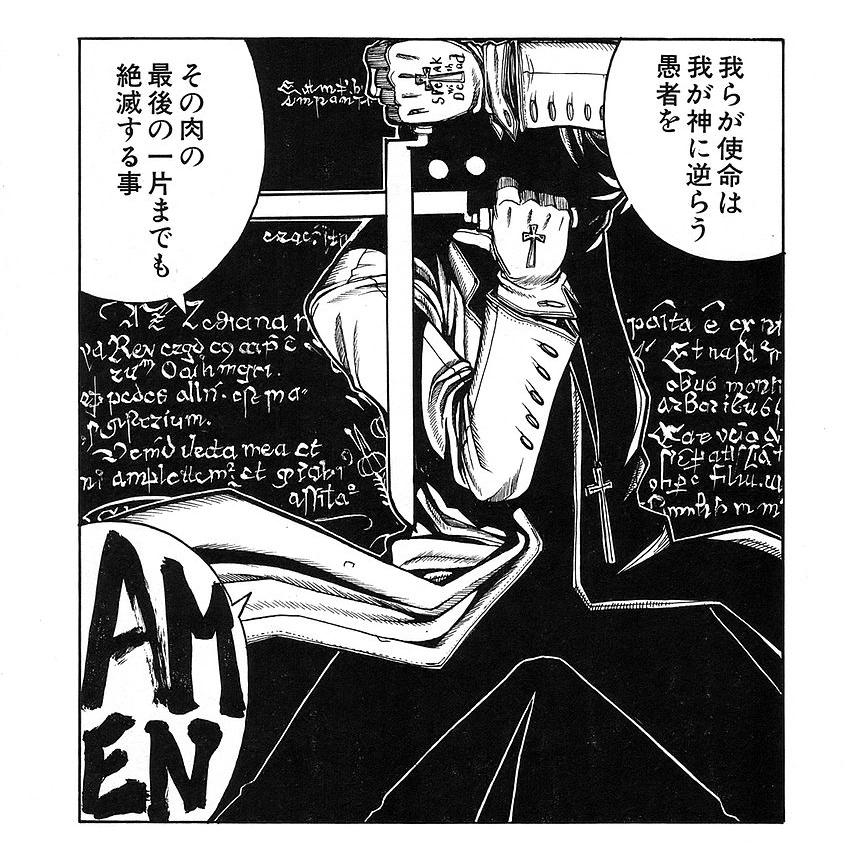
Anderson declares his mission to kill those who would oppose his God
Alexander Anderson was an ardent Catholic.[2] He carried an obsession for what he believed to be his "crusade" and compulsively quoted passages from the Bible as he spoke.[22][23][24] His harangue speeches and his constant tendency to quote scriptures indicated a clear fanatical obedience towards "the Word of God," believing himself to be a physical instrument of God's wrath on earth acting on strong resolve; hence, he maintained a sense of a rigidly absolute worldview, showing no tolerance for those who defy his God.[25][26][27][28] His outspoken loyalty to God led him to oppose Enrico Maxwell's modus operandi, betraying him when he concluded that Maxwell's actions were motivated not by servitude to God but by a desire for revenge as his dream.[29][30] Furthermore, he longed to have been a natural phenomenon acting in accordance with God's will, even if it meant forsaking his humanity.[8][24]
Anderson was starkly anti-Ecumenism. From his perspective, the demise of those he deemed heretics is fortunate, believing that if done in service to God, treachery against infidels should be praised.[31] Thus, he had no qualms about killing Protestants regardless of their status, rather suggesting that the only justifiable acts of violence target Protestants and monsters.[10][24]
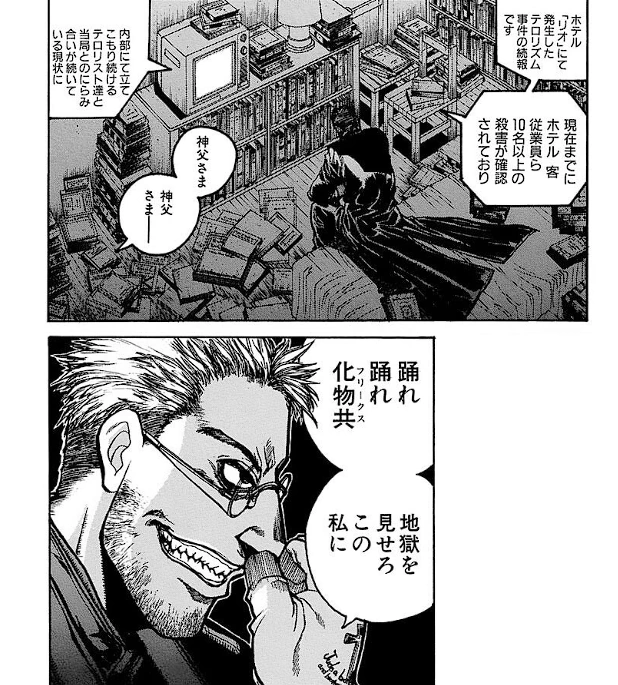
Anderson watches the Rio de Janeiro massacre with a morbid smile, wishing that the two monsters would kill each other in the process
In fact, he relished in the deaths of Protestants caused by a surge in vampiric attacks[32] and seemed to watch Alucard's massacre of the GATE unit and eventual battle with Tubalcain Alhambra with a macabre enjoyment in hopes that the two monsters would slaughter each other, despite the battle causing collateral casualties in Rio de Janeiro.[33][28] While he bore the disgraced apostle's name and carried out God's wrath, he considered and accepted that his deeds necessitated a "necessary evil" that would ultimately damn his soul to Hell.[34][35] Consequently, his deep-seated hatred of Protestants compelled him to callously murder them if the opportunity presented.[36] His biotechnological transformation and mercilessness in battle were all a part of his self-imposed crusade, frequently losing control and hissing during fights.[37][38][39] However, on rare occasions, he could regain composure and prevent himself from acting to the detriment of Iscariot's duty.[40]
This is a nice museum. Let's bring the children from the orphanage next time. (良い博物館だㅤ次は孤児院の 子供達を連れて 来ましょう) (Yoi hakubutsukan da. Tsugi wa kojiin no kodomotachi wo tsurete kimashō.)
—Alexander Anderson, to Enrico Maxwell (Order 12: Balance of Power (2))
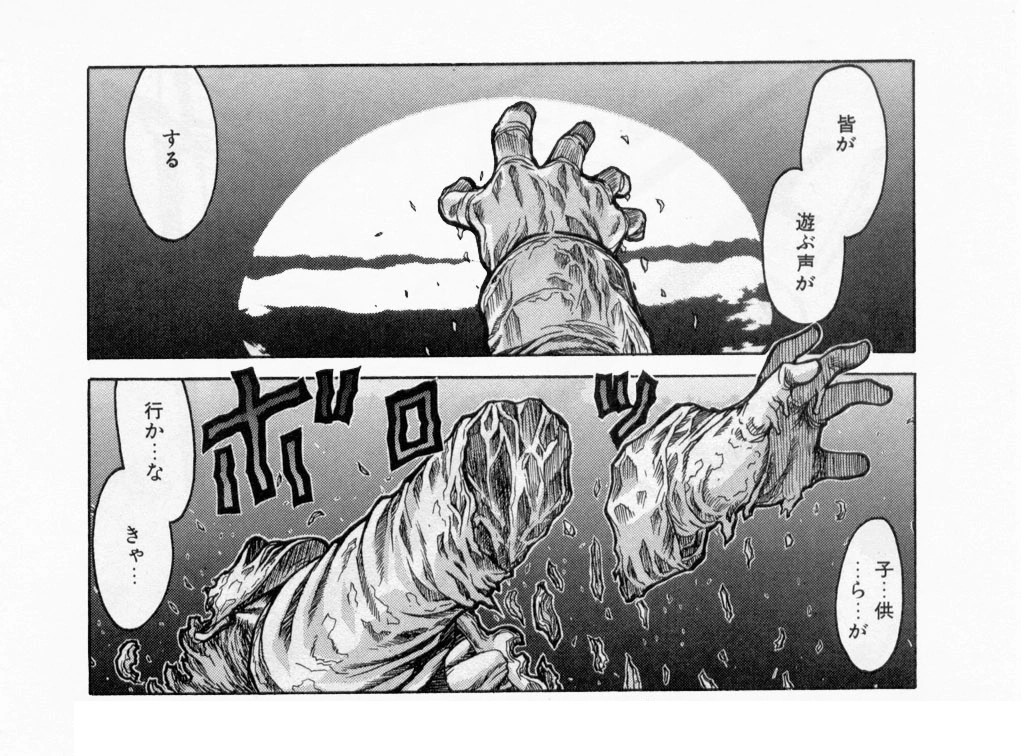
Anderson's final thoughts lie in the children under his care
Despite it all, his violent displays were only reserved for non-Catholics, while he seemed rather gentle with his people, especially towards those under his care in Ferdinant Lukes and those of his creed.[10][41][2][42][24] He expressed his wish for those under him to live on and protect Catholicism rather than overfilling Limbo by dying against Alucard.[43] While he detested their existence, he showed a sense of twisted respect toward those who attempt to uphold their own sense of justice, such as Alucard and Integra Hellsing;[44][45][24] with the latter, he cooperated in transporting her back to the Hellsing Headquarters regardless of Maxwell's direct order to apprehend her.[46][47]
It is no longer a man, nor a devil. It is not the day, nor the night. (其はもはや 人で無く魔で無くㅤ昼で無く 夜でも無い) (Sore wa mohaya hito de naku ma de naku. Hiru de naku yoru demo nai.)
—Narrator (Order 67: Psyoblade)
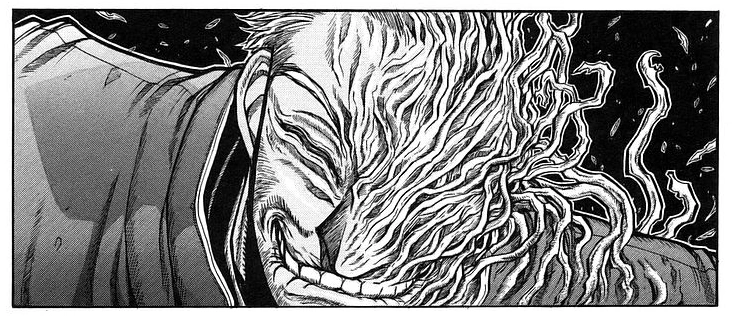
Despite the loss of his core personality, Anderson remained emotive in combat under the Holy Nail's influence
Once thrusting himself with the Holy Nail and abandoning his humanity for God, Anderson's core personality was lost. He did not speak and simply attacked Alucard while under its influence, implying that the Holy Nail may have suppressed his thought processes. However, he was still fairly emotive in combat.[48][49] Upon regaining control after his heart had been extracted and crushed, Anderson saved his thoughts in his final moments for the children under his care, even Maxwell.[50][51]
Relationships
- Enrico Maxwell: When Enrico Maxwell was placed under Anderson's care by Father Ronald, he took great intrigue in the boy's determination to become "great."[52] Maxwell's resolve earned him the director's position of Iscariot and the title of bishop, becoming one of the three prodigies Anderson had nurtured.[53][54][55] Yet, the two came to a head when Maxwell's treachery was deemed not to be done in accordance with God's will but rather with Maxwell's inner rage.[29][30][35]
Consequently, Anderson caused Maxwell's death by shattering the tektite glass shielding him from being killed by Alucard's familiars.[56] However, his death spurred Anderson.[57][58] One of the voices he heard as he withers away was Maxwell's cries among the many voices of the children at the orphanage.[50][51]
- Heinkel Wulf and Yumiko Takagi: For Anderson, Heinkel Wulf and Yumiko Takagi were his prodigious children;[53][59][55][42] the two would become expert assassins under Iscariot and be directly under Anderson's direct command. He wanted them to live long and preserve Catholicism; thus, he ordered them (and the rest of the Armed Priest Vanguard) to retreat when Alucard unlocked Level Zero and the Ninth Crusade forces were decimated.[60] Though he was initially maddened when they defied his orders to retreat and instead attempted to help him face Alucard's familiars, he eventually accepted their assistance and willing sacrifice in the doctrines that Anderson himself had taught them.[61]
- Alucard: As he dedicated his life towards killing monsters, Anderson strived to end Alucard at all cost.[62] He recognized that a battle with Alucard would inevitably guarantee his death.[63] Yet, he seemed to derive a sense of enjoyment from his fights with Alucard; the two almost seem content to live so they can fight each other, engaging in combat immediately upon sight.[64][65] He defied orders from Maxwell to confront Alucard before the tension dissipated.[66][67] However, he seemed to have a sense of respect for Alucard, branding him "the Black Peril."[44] To prepare himself against Alucard after their first encounter, he pushed beyond his limits as a human, leaving Alucard mesmerized in the face of Anderson's sheer resolve.[68][62]
Even then, their fundamental beliefs are starkly different when Anderson chose to forsake his humanity and became God's Monster through the Holy Nail, despite Alucard's urgent pleas.[69] He professed to wishing to be a calamity willed by God, regardless of whether that meant losing all free will and becoming a monster.[8] He gladly gave his life and will for God after he concluded that being human was not sufficient in defeating Alucard.[62] This course of action led to Alucard deeming Anderson as someone who was not worthy of defeating him, becoming a mirror he detests.[70][71]
When Alucard defeated Anderson and was overcome with emotions and cried, Anderson attempted to comfort him in a fatherly manner.[72] He pitied Alucard's existence and fell upon his final prayer to Alucard, who smiled as he uttered, "Amen."[73][71] Despite Walter C. Dornez's desecration of Anderson's corpse, Alucard remained in a kneeling position as Anderson's ash coursed through the wind, barely responding to the commotion while he stared down solemnly.[74][75]
Background
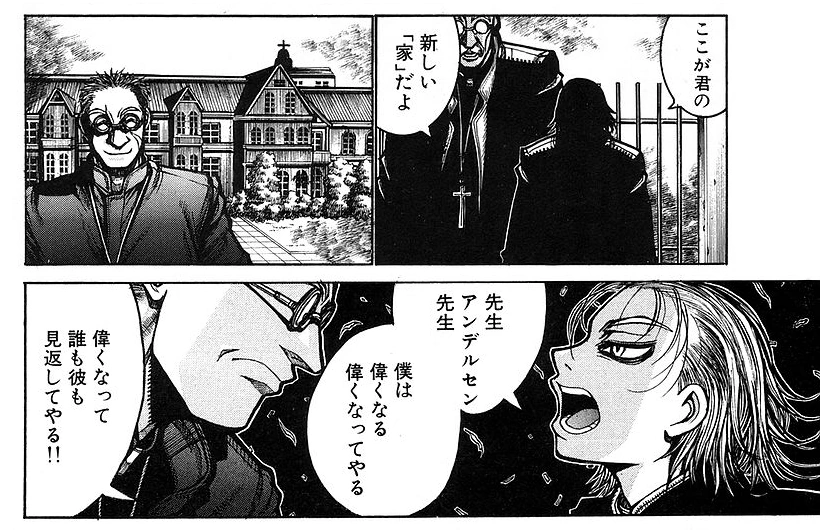
Anderson taking in and carefully listening to the boy's ambitions under his teachings
Anderson's past is shrouded in mystery. At some point, his body underwent biotechnological experiments that led to his regenerative capabilities, and he became the trump card for the Vatican's Section XIII.[76] Around that time, Anderson presumably founded Ferdinant Lukes, an orphanage for Catholic children located outside of the vicinity of Rome.
Around the 1970s, Father Ronald introduced young Enrico Maxwell to his new home in Anderson's orphanage. He was intrigued by the boy's proclamation of becoming "great."[52][54] Later, he would also take in and nurture Heinkel Wulf and Yumiko Takagi.[53][55][77]
Capabilities and Arms
| Regenerator |
|---|
| 再生者 |
As a Regenerator, Anderson possessed extraordinary strength, speed, senses, balance, coordination, and stamina, far above what is considered normal for a human.[24] He was the single greatest warrior the Vatican could bring to bear, a warrior specialized in exorcism, oppression, and extermination.[4] The following are Anderson's powers gained from the peak of biotechnological experiments done to him by the Vatican. |
- Superhuman Strength: Anderson had fought Alucard, who was unfazed from taking high-caliber bullets to the chest, to a standstill with his bare hands, staggered him, and caused his nose to bleed with a single punch.[64] With his immense strength, he threw his bayonets through a tektite composite panel that protected Maxwell[78] and was able to bisect Artificial Vampires with ease.[79][80]
- Superhuman Speed and Reflexes: Anderson's reflexes were sufficient to allow him to react to bullets, although he preferred to take them head-on thanks to his regeneration. He caught Alucard unprepared with his speed during their first fight[81] and blitzed multiple Last Battalion soldiers with his bayonets,[80][82] at one point impaling one with multiple bayonets despite the fact that he had rushed in midair at full speed towards Integra.[83] During the Anglo-American Bioterrorism Incident, he clashed with Alucard equally and sliced through his army of ghouls at great speed.[84][85][86]
- Superhuman Durability and Endurance: Heavily durable, Anderson effortlessly shrugged off shots from a dozen automatic rifles, none of which pierced through his flesh.[87] He could take several direct punches from Alucard.[64] His incredible endurance allowed him to keep on plowing through Alucard's massive army of ghouls despite having his arm nearly shot off by the Jackal.[85] He endured being shot by Rip Van Winkle's Magic Bullet, followed by Tubalcain's anti-regeneration Playing Cards, a testament to his fighting spirit.[88]
Indomitable Will: Laden with mortal wounds and a left arm that was almost torn off, Anderson defied Alucard's gloating and intended to fight and kill even if the chances were on "the far side of googol."[88] He bit his nearly severed left arm and fought through waves of familiars,[89] managing to reach Alucard with the help of the Armed Priest Vanguard's suicide bombing tactic.[90]
|
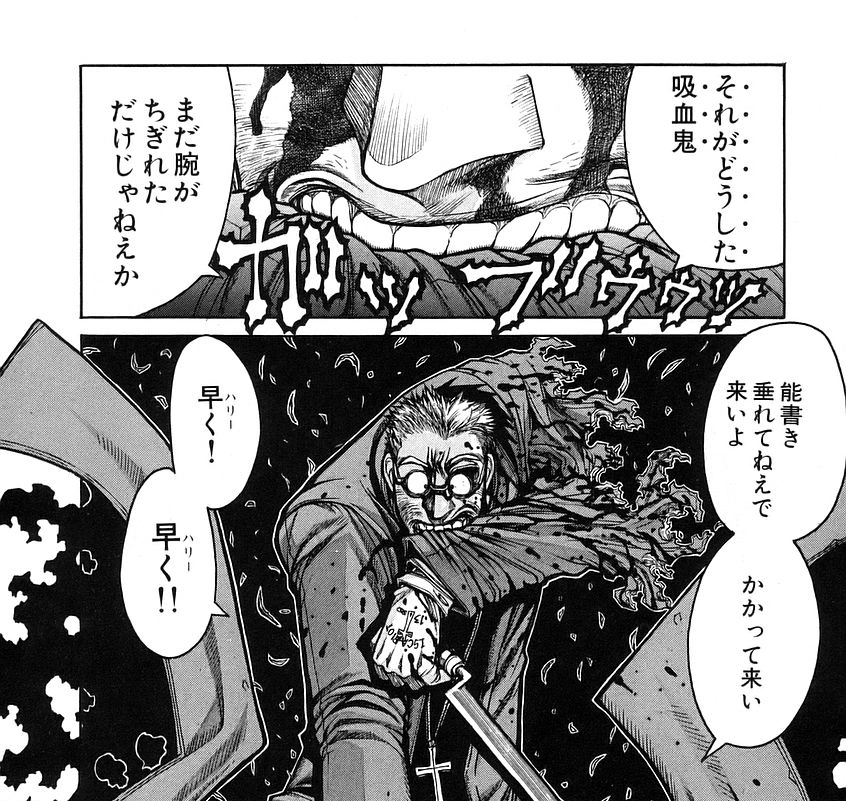

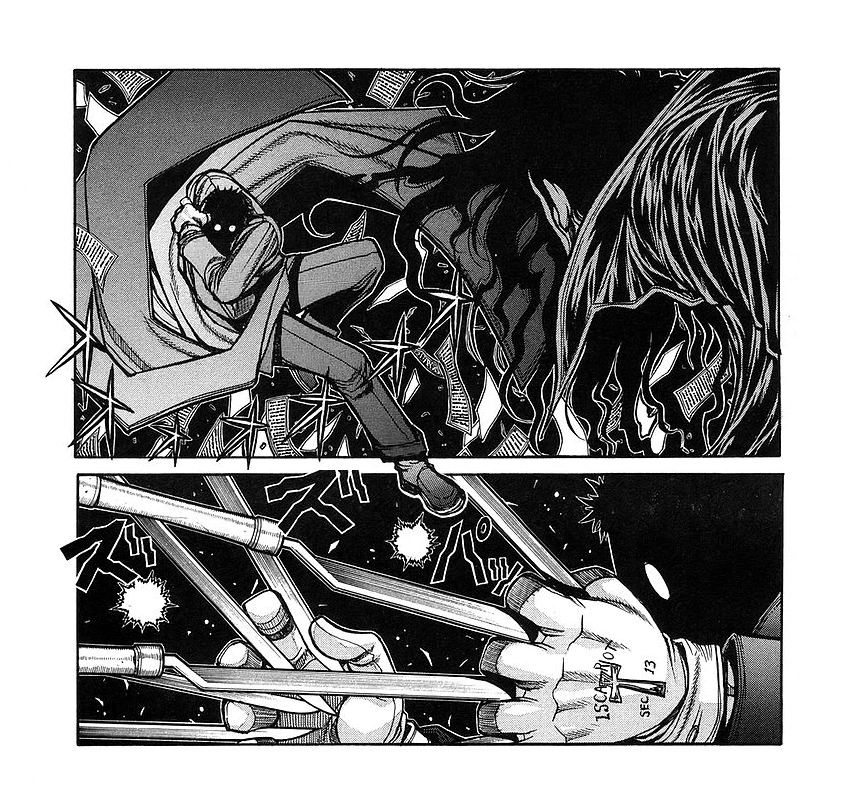
| Bayonet Mastery: Anderson skillfully wielded his bayonets with great dexterity in close-quarters combat and could also throw them with extreme accuracy, especially considering that he often threw the bayonets in large numbers, usually holding them between his fingers.[92][93][94] He cracked hardened tektite glass[78] and had skewered vampires, from the Last Battalion's foot soldiers[95][96] to Alucard himself.[97]
|
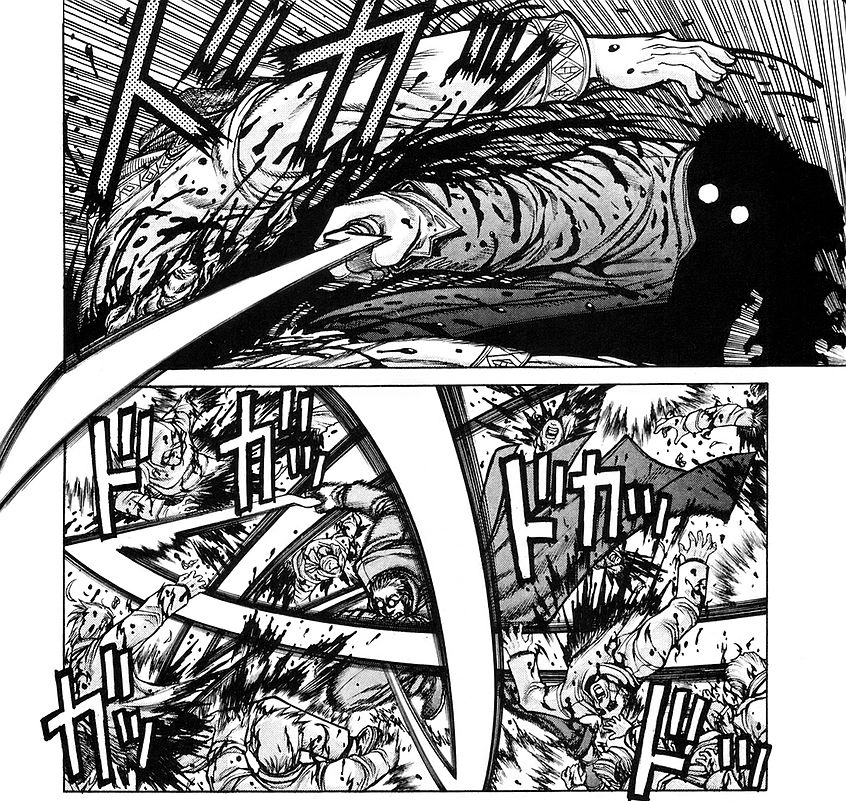

| Bayonet Summoning: Anderson seemed to have a limitless supply of bayonets that he could pull from, suggesting that he benefited from Hammerspace.[92][93][94]
|

| Biotechnological Regeneration | |
| Through the culmination of anti-monster technology resulting from the Vatican's bioengineering, Anderson was provided a highly durable body and self-regenerative abilities.[98][76][24] In fact, the self-regenerative capabilities granted by the procedure were potent enough for him to be nicknamed "Regenerator."[98][6][24] Explicably, the procedure was specifically developed to combat monsters[98][99] without losing one's sense of humanity but rather pushing the limits of it.[62] This allowed Anderson to combat Alucard on near-equal terms.[24]
|
His durable body allowed him to withstand continuous fire from assault rifles without flinching or scraping his skin.[87] High-caliber bullets, such as Alucard's .454 Casull, merely graze his forehead, with the wound regenerating shortly thereafter.[100] Later, the .454 Casull's bullets failed to scratch Anderson's skin despite constant fire.[101] Even the combined assault of Rip Van's Magic Bullet and Tubalcain's Playing Cards was regenerated by Anderson, albeit slower than usual.[88][102] In effect, the self-regeneration ability was elevated by some sort of "healing spell."[103][76]
|
| The highly effective regenerative capabilities and the durability Anderson showed forced the development of the Jackal, a 13mm high-caliber pistol manufactured by Walter for Alucard with the sole purpose of combating Anderson.[104][105] A single round managed to nearly sever Anderson's left arm, which did not regenerate.[106]
| |
 OVA  Manga | |
| Arms |
|---|
| 武器 |
Aiding Anderson in his crusade against infidels and monsters were his blessed weapons, prominently handheld bayonets. |
| Holy Bayonets 祝福儀礼の銃剣
| |
|---|---|
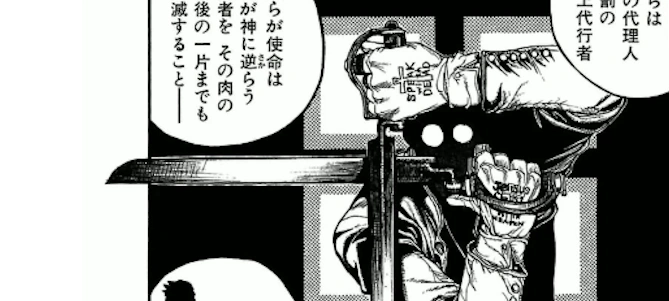
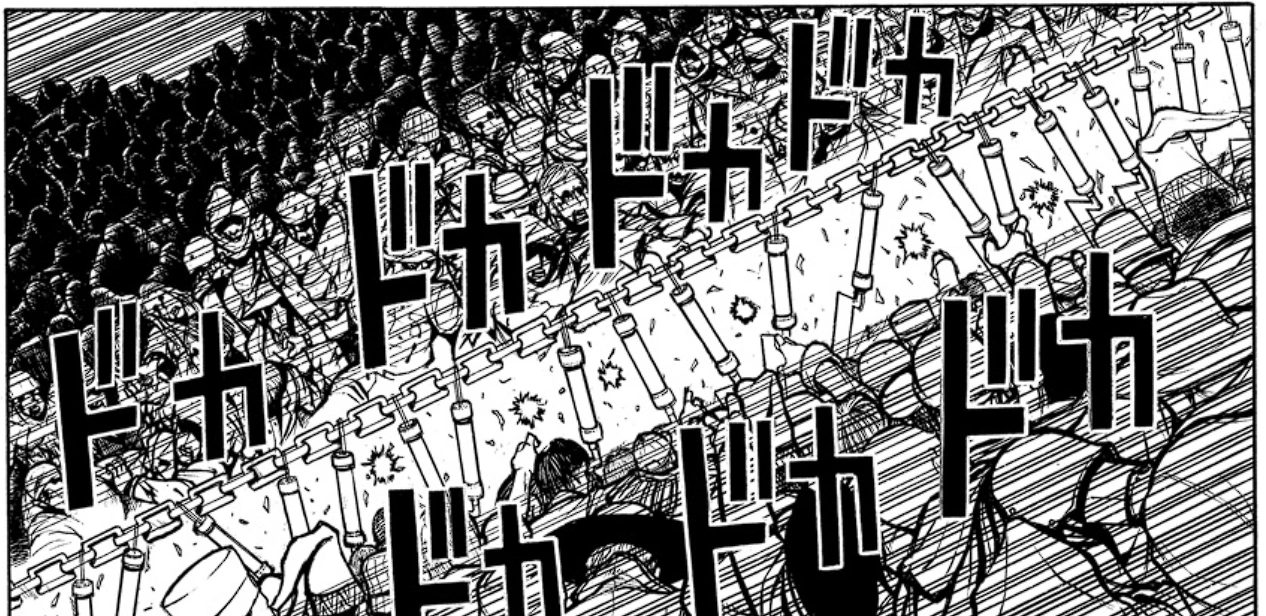
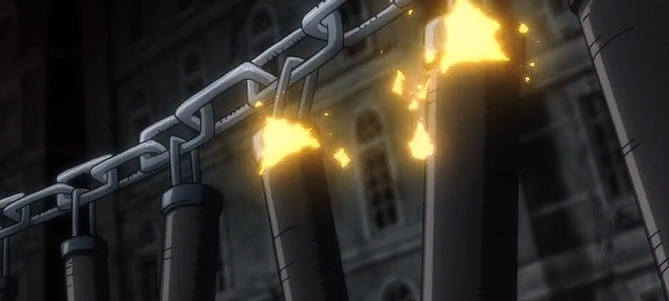
| His Holy Bayonets were specialized, each of them being blessed, which made them highly dangerous to the supernatural and negated their regenerative capabilities.[107][76] Some of the bayonets were equipped with explosives in their handles;[83][93] when several of these were chained together, Anderson referred to them as "Mine Chains (爆導鎖, Bakudōsa; lit. "sequential blast chain")."[108] A delay was visibly present on impact, allowing sequential explosions.[83][93][109]
| |
| Specialized Holy Bible 特殊な聖書
| |
|---|---|
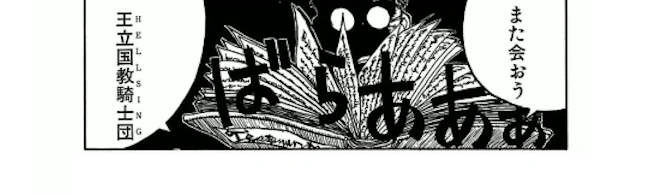
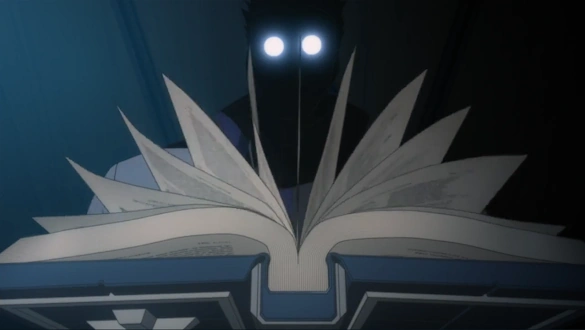
Anderson used a specially crafted Holy Bible that allowed him to manipulate the scriptures for a variety of purposes in combat.[24]
 Holy Barriers (manga)  Teleportation (manga)  Holy Barriers (OVA)  Teleportation (OVA)
| |
| Holy Nail of Helena エレナの聖釘
| |||||||
|---|---|---|---|---|---|---|---|
| The Holy Nail of Helena, in truth, refers to any of the several Holy Nails with which Jesus was crucified. As such, the Holy Nails are objects of veneration among some Christians, particularly among Catholics. They are among the Arma Christi, otherwise known as the "Instruments of the Passion," which are commonly associated with the Passion of Jesus. The veracity of legends regarding the Holy Nail is nebulous, however, as there are many conflicting stories—even the exact number of nails used in Jesus's crucifixion is debated. Retrieved by the Vatican's Section III, Matthew, the Holy Nail is imbued with a "miraculous scent."[114] Those whose hearts are pierced with the Holy Nail become subject to God's will, in essence, becoming "God's Monster."[115] The Holy Nail was Anderson's trump card in his fight against Alucard after he concluded that he cannot defeat Alucard as a human.[62] Consequently, he pierced his heart with the Holy Nail and lost his sense of self to realize his dream of becoming a physical cataclysm willed by God.[116]
| |||||||
| |||||||

Concept and Creation
| Character Conception 1 | ||||||||||||||||||||
|---|---|---|---|---|---|---|---|---|---|---|---|---|---|---|---|---|---|---|---|---|
| Kohta Hirano begrudgingly inserted Alexander Anderson in the Hellsing series after the manuscript of Angel Dust for Comic Papipo was not returned.[128] He conceived Anderson as a rival character for Alucard and the only one who closely matched his level of power.[129] His intolerance for some sort of happy ending in a series where the resolution is death decided Anderson's fate when he introduced the character as Alucard's counterpart trump card in the Vatican.[130][131] Nearing the end of serialization, Hirano regretted ending the fight between Alucard and Anderson prematurely, as he felt that he was attempting to wrap the series as soon as possible, harming the pacing of the series; thus, he felt the presentation of the fight could have been better.[132] However, the status quo of the series is made clear when Anderson was shortly defeated after becoming a monster.[133] Anderson became one of Hirano's favorite characters when the series concluded. Despite his satisfaction with the series's conclusion, he felt that Anderson's character was given little room to explore and wished that he had expanded on the character.[134]
| ||||||||||||||||||||
| Design Conception 2 | ||||||||||||||||||||
Anderson's design was derived from a character of the same name in Angel Dust and Cross Fire, respectively.[128] However, out of the four Iscariot characters he brought back from Cross Fire, Anderson's character design was the very last one to be finalized despite being introduced first.[135] He found bayonets to be exceptionally cool and conceptualized them as Anderson's primary weapons.[136] Anderson has a seemingly limitless number of bayonets at his disposal; Hirano jokingly attributes this to him being four-dimensional.[128] Later, he expressed the difficulty in drawing Anderson's thorns.[137]
 Angel Dust  Cross Fire  Hellsing
| ||||||||||||||||||||
| Name Conception 3 | ||||||||||||||||||||
Anderson's name was mostly derived from a character of a similar name in Angel Dust and Cross Fire, Hirano's previous work. However, one notable difference between them is the written katakana name, with Anderson's name in Hellsing being written with the "ル (ru)" katakana character in place of the "ダ (da)" katakana character with the prolonged vowel line "ー" used for Anderson's iteration in Angel Dust and Cross Fire.[138]
| ||||||||||||||||||||
Appearances
| Manga Chapters |
Mentioned only
|
| OVA Volumes |
Trivia
- Anderson's choice of weapon, his bayonets, are referencing the knife put on the end of a rifle, literally meaning Anderson is God's Gun.
- Norio Wakamoto voicing Anderson's lines ("If anyone does not love the Lord, Jesus Christ, let him be accursed. Our Lord come. Amen.") in English is memetic for how poorly he had spoken them.
- Walter said one of his nicknames is Angel Dust Anderson, a reference to one of Hirano's older works, Angel Dust. This was changed to "Dust to Dust" Anderson in the English dub because "angel dust" is a popular term for PCP, a drug with hallucinogenic and neurotoxic effects that causes abusers to become a danger to both themselves and others.
Footnotes
Notes
- ↑ For the English dub, Taliesin Jaffe directed Steven Brand to voice Anderson in his natural Scottish accent after discovering that a historical "Father Alexander Anderson" once worked for the Eusebian Canons.[18] The English localization release by Dark Horse Comics follows suit, typesetting Anderson's dialogues to mimic a Scottish accent. Otherwise, notes by Hirano remark the only non-Italian Iscariot member to be Yumiko Takagi, who is of Japanese descent.[19]
- ↑ In the OVA, his hair is platinum blond and his eyes are blue.
- ↑ In the OVA, his cassock overcoat is blueish gray, which has a blue trim and interior; his cassock is black with blue trim, and his shoes are brown.
- ↑ The inscription sometimes changes or disappears entirely in the manga.
References
- ↑ Volume 1, Order 04: Sword Dancer (1) (p. 7)
- ↑ 2.00 2.01 2.02 2.03 2.04 2.05 2.06 2.07 2.08 2.09 2.10 2.11 Hellsing Official Guidebook (p. 050)
- ↑ Volume 1, Order 04: Sword Dancer (1) (p. 3)
- ↑ 4.0 4.1 4.2 4.3 4.4 4.5 4.6 4.7 Volume 1, Order 05: Sword Dancer (2) (p. 6)
- ↑ Volume 3, Order 12: Balance of Power (2) (p. 6)
- ↑ 6.0 6.1 6.2 6.3 6.4 6.5 Volume 6, Order 40: Final Fantasy (5) (p. 13)
- ↑ Volume 6, Order 41: The Screamer (p. 9)
- ↑ 8.0 8.1 8.2 Volume 8, Order 65: Might and Magic (1) (p. 10)
- ↑ 9.0 9.1 Volume 4, Order 25: D (1) (p. 5)
- ↑ 10.0 10.1 10.2 Volume 1, Order 04: Sword Dancer (1) (p. 1)
- ↑ Volume 8, Order 62: Hundred Swords (1) (p. 20)
- ↑ Volume 8, Order 63: Hundred Swords (2) (p. 4)
- ↑ Volume 3, Order 12: Balance of Power (2) (p. 15)
- ↑ 14.0 14.1 Volume 8, Order 62: Hundred Swords (1) (p. 7)
- ↑ Volume 8, Order 61: Wizardry (5) (p. 15)
- ↑ 16.0 16.1 Volume 1, Order 05: Sword Dancer (2) (p. 7)
- ↑ Volume 1, Order 06: Sword Dancer (3) (p. 20)
- ↑ Hellsing: Ultimate I — English DVD Commentary.
- ↑ 19.0 19.1 "ヤングキングアワーズ 2005年10月号." Shonengahosha. August 30, 2005.
- ↑ 21.0 21.1 21.2 Hellsing: Volume 8 — Volume cover.
- ↑ Volume 3, Order 12: Balance of Power (2) (p. 13)
- ↑ Volume 5, Order 35: Xanado (p. 16)
- ↑ 24.00 24.01 24.02 24.03 24.04 24.05 24.06 24.07 24.08 24.09 Hellsing: Ultimate VIII — Booklet Supplementary Material.
- ↑ Volume 1, Order 04: Sword Dancer (1) (pp. 8, 28)
- ↑ Volume 4, Order 25: D (1) (p. 8)
- ↑ Volume 8, Order 61: Wizardry (5) (p. 17)
- ↑ 28.0 28.1 Hellsing Official Guidebook (p. 052)
- ↑ 29.0 29.1 Volume 7, Order 57: Wizardry (1) (p. 9)
- ↑ 30.0 30.1 Volume 8, Order 60: Wizardry (4) (p. 19)
- ↑ Volume 7, Order 57: Wizardry (1) (p. 8)
- ↑ Volume 1, Order 04: Sword Dancer (1) (p. 5)
- ↑ Volume 3, Order 15: Elevator Action (2) (p. 1)
- ↑ Volume 6, Order 41: The Screamer (pp. 6-12)
- ↑ 35.0 35.1 Hellsing Official Guidebook (p. 062)
- ↑ Volume 1, Order 06: Sword Dancer (3) (pp. 14-16)
- ↑ Vampire Hunter Arc
- ↑ Final Fantasy Arc
- ↑ Wizardry Arc
- ↑ Volume 4, Order 21: Age of Empire (2) (pp. 28-30)
- ↑ Volume 3, Order 12: Balance of Power (2) (p. 18)
- ↑ 42.0 42.1 Hellsing Official Guidebook (p. 064)
- ↑ Volume 8, Order 61: Wizardry (5) (p. 4)
- ↑ 44.0 44.1 Volume 7, Order 57: Wizardry (1) (p. 16)
- ↑ Volume 6, Order 40: Final Fantasy (5) (p. 16)
- ↑ Volume 6, Order 43: Gun Bullet (pp. 8-9)
- ↑ Hellsing Official Guidebook (p. 061)
- ↑ Volume 8, Order 67: Psyoblade
- ↑ Volume 9, Order 69: Castle vania (2)
- ↑ 50.0 50.1 Volume 9, Order 70: Heart of Dream (pp. 5-9)
- ↑ 51.0 51.1 Hellsing Official Guidebook (p. 065)
- ↑ 52.0 52.1 Volume 8, Order 61: Wizardry (5) (pp. 1-2)
- ↑ 53.0 53.1 53.2 Volume 8, Order 66: Might and Magic (2) (p. 2) — Chapter cover.
- ↑ 54.0 54.1 Hellsing Official Guidebook (p. 054)
- ↑ 55.0 55.1 55.2 Hellsing Official Guidebook (p. 056)
- ↑ Volume 8, Order 60: Wizardry (4) (pp. 18-26)
- ↑ Volume 8, Order 61: Wizardry (5) (pp. 1-6)
- ↑ Hellsing Official Guidebook (pp. 066-067)
- ↑ Hellsing Official Guidebook (p. 055)
- ↑ Volume 8, Order 61: Wizardry (5) (pp. 4-6)
- ↑ Volume 8, Order 64: Hundred Swords (3) (pp. 9-12)
- ↑ 62.0 62.1 62.2 62.3 62.4 Hellsing Official Guidebook (p. 053)
- ↑ Volume 8, Order 61: Wizardry (5) (p. 6)
- ↑ 64.0 64.1 64.2 Volume 4, Order 21: Age of Empire (2) (pp. 17-26)
- ↑ Hellsing Official Guidebook (p. 079)
- ↑ Volume 3, Order 12: Balance of Power (2) (pp. 13-17)
- ↑ Hellsing Official Guidebook (p. 078)
- ↑ Volume 8, Order 62: Hundred Swords (1) (pp. 6-7)
- ↑ Volume 8, Order 65: Might and Magic (1)
- ↑ Volume 9, Order 69: Castle vania (2) (pp. 9, 22-23)
- ↑ 71.0 71.1 Hellsing Official Guidebook (p. 081)
- ↑ Volume 9, Order 69: Castle vania (2) (pp. 22-24)
- ↑ Volume 9, Order 70: Heart of Dream (pp. 2-5, 9)
- ↑ Volume 9, Order 71: Relics
- ↑ Volume 9, Order 73: Finesthour (1) (p. 1)
- ↑ 76.0 76.1 76.2 76.3 Hellsing Official Guidebook (p. 051)
- ↑ Hellsing Official Guidebook (p. 057)
- ↑ 78.0 78.1 Volume 8, Order 60: Wizardry (4) (pp. 18-19)
- ↑ Volume 6, Order 41: The Screamer (pp. 5-6)
- ↑ 80.0 80.1 Volume 6, Order 42: Aubird Force (p. 1)
- ↑ Volume 1, Order 05: Sword Dancer (2) (pp. 18-19)
- ↑ Hellsing: Ultimate V
- ↑ 83.0 83.1 83.2 Volume 6, Order 40: Final Fantasy (5) (p. 11-13)
- ↑ Volume 8, Order 62: Hundred Swords (1) (pp. 1-5)
- ↑ 85.0 85.1 Volume 8, Order 63: Hundred Swords (2) (pp. 7-13)
- ↑ Hellsing: Ultimate VIII
- ↑ 87.0 87.1 Volume 4, Order 25: D (1) (p. 7)
- ↑ 88.0 88.1 88.2 Volume 8, Order 62: Hundred Swords (1) (pp. 19-20)
- ↑ Volume 8, Order 63: Hundred Swords (2) (pp. 4-13)
- ↑ Volume 8, Order 64: Hundred Swords (3) (pp. 1-18)
- ↑ Volume 8, Order 63: Hundred Swords (2) (pp. 3-5)
- ↑ 92.0 92.1 Volume 4, Order 25: D (1) (pp. 7-8)
- ↑ 93.0 93.1 93.2 93.3 Volume 6, Order 41: The Screamer (pp. 7-11)
- ↑ 94.0 94.1 Volume 8, Order 62: Hundred Swords (1) (pp. 9-11)
- ↑ Volume 6, Order 41: The Screamer
- ↑ Volume 6, Order 42: Aubird Force
- ↑ Volume 1, Order 05: Sword Dancer (2)
- ↑ 98.0 98.1 98.2 Volume 1, Order 05: Sword Dancer (2) (p. 26)
- ↑ Volume 1, Order 06: Sword Dancer (3) (p. 22)
- ↑ Volume 1, Order 05: Sword Dancer (2) (pp. 20-26)
- ↑ Volume 8, Order 62: Hundred Swords (1) (p. 15)
- ↑ Volume 8, Order 63: Hundred Swords (2) (p. 3)
- ↑ Volume 1, Order 06: Sword Dancer (3) (p. 17)
- ↑ Volume 2, Order 07: Dead Zone (1) (p. 12)
- ↑ Volume 9, Order 74: Finesthour (2) (p. 13)
- ↑ Volume 8, Order 62: Hundred Swords (1) (p. 16)
- ↑ Volume 1, Order 05: Sword Dancer (2) (p. 18)
- ↑ Volume 8, Order 63: Hundred Swords (2) (p. 11)
- ↑ Volume 8, Order 63: Hundred Swords (2) (pp. 11-12)
- ↑ Volume 1, Order 04: Sword Dancer (1) (p. 25)
- ↑ Volume 1, Order 06: Sword Dancer (3) (p. 7)
- ↑ Volume 1, Order 06: Sword Dancer (3) (pp. 26-27)
- ↑ Volume 8, Order 61: Wizardry (5) (pp. 6, 12-13)
- ↑ Volume 8, Order 65: Might and Magic (1) (pp. 5-7)
- ↑ Volume 8, Order 65: Might and Magic (1) (p. 8)
- ↑ Volume 8, Order 65: Might and Magic (1) (pp. 10-12)
- ↑ 117.0 117.1 Volume 8, Order 65: Might and Magic (1) (p. 15)
- ↑ Volume 8, Order 67: Psyoblade (pp. 6-9)
- ↑ 119.0 119.1 Volume 8, Order 67: Psyoblade (pp. 2-5)
- ↑ Volume 9, Order 69: Castle vania (2) (pp. 17-24)
- ↑ Volume 9, Order 70: Heart of Dream
- ↑ Volume 8, Order 65: Might and Magic (1) (p. 22)
- ↑ 123.0 123.1 Volume 8, Order 65: Might and Magic (1) (pp. 17-21)
- ↑ Volume 8, Order 66: Might and Magic (2) (pp. 1-3)
- ↑ Volume 8, Order 67: Psyoblade (pp. 4-5)
- ↑ 126.0 126.1 Volume 9, Order 69: Castle vania (2) (pp. 13-18)
- ↑ 127.0 127.1 Volume 8, Order 67: Psyoblade (pp. 10-12)
- ↑ 128.0 128.1 128.2 Hellsing: Volume 1 (p. 180) — Character introductions.
- ↑ Hellsing Official Guidebook (pp. 172-173)
平野 アンデルセンがいなければ、第13課がヘルシング機関に対抗できるような組織にはならなかったんです。キャラひとりひとりが弱すぎて。なので、アーカードと対になるキャラを、と思いアンデルセンを作りました。そういう点から見ると、ミレニアムにはアーカードと対になるキャラがいないんですよ。大尉をそのポジションに置こうとも考えたんですが、実は大尉はそこまで強くはない。アーカードVSアンデルセンの戦いに大尉が参入したところで勝ち目はない気がします。だから、ミレニアムは悪役組織の主軸なのに、アーカードに対抗できるだけの戦力はいないという、可哀想なことになる。 (Rough Translation: Frankly, Section XIII would never have become an agency capable of rivaling the Hellsing Agency without Anderson. Every character was too weak, so I conceived Anderson with the intention of making him a rival to Alucard. So from the perspective, Millennium doesn't really have a character who can match up to Alucard's strength. Although I did consider putting The Captain in that role, but the truth is, The Captain isn't actually that strong. I don't think he stands a chance if he were to join the battle between Alucard and Anderson. That's why, even though Millennium is the central evil organization, it ends up in this pitiful situation where it lacks the combat power to stand up to Alucard.) - ↑ Hellsing Official Guidebook (p. 159)
平野 敵方の組織が出てきたあたりからですね。第3話でまずライバルキャラのアンデルセンというキャラを出し、第4話で別ポジションの古典的な悪の組織を出してストーリーを回転させていく形になりました。 (Rough Translation: It was when the enemy organization appeared. In the third chapter, I introduced a rival character named Anderson, and in the fourth chapter, I introduced a classic evil organization in a different position, and the story began to open. The end of Anderson, Alucard's favorite enemy, was already decided from the beginning.) - ↑ Hellsing Official Guidebook (p. 159)
平野 アンデルセンが死ぬのは初めから決めてました。ライバルの敵キャラが共通の敵に対して共闘する形はキャラクターのパターンですが最後は主人公との決着をつけなければならない。で、このまんがの場合、決着=死ですので…。決着がついたのに敗れた方を生かしておくような種類の作品ではありませんし。「努力・友情・死亡」なんですよ。僕自身、共闘してそのまま仲間になって幸せに生きながらえました、という結末は許せなきながらえました、という結末は許せなかったんです。ベジータだけは別。ブルマとぱふぱふしながら幸せに暮らせ。そもそも当初は、第13課を丸ごと皆殺しにしようと考えていました。ヘルシング機関以外は誰も生き残らない、というラストにしようと思っていたんです。ですが、やっぱり第13課には思い入れもあったので、1人だけ生き残るという流れになりましたね。 (Rough Translation: I had decided from the very start that Anderson would die. Having a rival character team up with the protagonist against a common enemy is a classic character trope, but in the end, they must settle things with the main character. And in the case of this manga, settling things equals death... It is simply not the kind of story where you leave the defeated party alive after a conflict has been resolved. It’s all about "Effort, Friendship, Death." Personally, I just could not tolerate a conclusion where characters fight together, become buddies, and live happily ever after. Vegeta is the only exception. Let him live happily ever after doing "pafu-pafu" with Bulma. In the first place, I originally planned to completely slaughter all of Section XIII (Iscariot). I intended to make an ending where absolutely no one survived except for the Hellsing Agency. However, I ultimately grew quite attached to Section XIII, so it evolved into a narrative where exactly one person managed to survive.) - ↑ Hellsing Official Guidebook (pp. 171-172)
平野 アンデルセンとマクスウェルは好きでした。ただ、後から考えてみると、アンデルセンはもう少し見せ場が欲しかったかな、と。コミックス8巻からは、とにかく早く決着をつけさせようとして少し早足になってしまったんです。アーカードVSアンデルセンと、セラスVS 大尉は、もっと良い戦い方、見せ方があったはずで、ただ、そう思うのはあくまでももう描き終わったからで、描いていた当時はあれが限界でしたね。 (Rough Translation: Asking who, I really liked Anderson and Maxwell. So when I look back, I feel like Anderson could have used a little more room. By volume 8, I was too eager to wrap things up quickly, so the pacing ended up feeling a bit rushed. The battles involving Alucard and Anderson and Seras and The Captain could have been handled and presented much better. But of course, I only realize that now that I’ve finished drawing them; at the time, that was the best I could do.) - ↑ Hellsing Official Guidebook (p. 160)
——人間だからこそアーカードと互角に戦ってきたアンデルセンが、人間ではなくなった瞬間にアーカードに敗れるというのが非常に印象的でした。
平野 アーカードは人間にしか倒せない、というのが作品の根っこだったので。化物になったものは人間に倒されるのがすべての基本的な流れなんですよ。少佐に関しても、彼自身は「人間だ」と言っていますが、インテグラからしてみたらどう見ても化物じゃないですか。だから、人間であるインテグラに倒された。ただ、アーカードから見れば少佐は人間なので、一時的ではありますが彼に倒される形になりました。それでも、やっぱり少佐はもう人間とは言えませんよね。だからアーカードを完全に殺すことは出来なかったんです。
Rough Translation
...That is why it was highly impressive that Anderson, who was able to fight on equal terms with Alucard precisely because he was human, ended up being defeated by Alucard the exact moment he ceased to be human.
Hirano: The main focal point of the story was that Alucard can only be defeated by a human. That's the fundamental narrative: anything that is a monster is ultimately defeated by a human. As for The Major, while he claims to be human, from Integra's perspective, he is a monster. That is why he was defeated by Integra, who is a human. However, from Alucard's perspective, The Major is human, which is why he was temporarily defeated by him. But The Major could not be considered 100% human, which is why Alucard was not killed completely. - ↑ Hellsing Official Guidebook (p. 172)
平野 平野 大まかなストーリーの流れは当初予定していた通りに進みましたし、着地点も想定していた通りのところでした。点も想定していた通りのところでした。なので、今になって「ああすれば良かった、こうすれば良かった」と考えるのは、戦闘シーンをメインにした見せ場のシーンの演出についてです。で、第13課だとアンデルセンが思い入れも深いですし、もうちょっとしっかり成仏させてやれば良かったんじゃないかともおもいますが尺的にも限界です。 (Rough Translation: The general flow of the story progressed exactly as I had initially planned, and the ending landed right where I expected it to. Therefore, looking back now and thinking "I should have done it this way" or "I should have done it that way" mostly applies to the direction of the climactic scenes, particularly the battle scenes. For example, regarding Section XIII, I have a deep attachment to Anderson, so I feel like it might have been better if I had given him a more proper, thorough peaceful passing (attaining Nirvana/salvation), but I was at my absolute limit in terms of page count.) - ↑ Hellsing Official Guidebook (p. 172)
平野 『HELLSING』の前に描いていた『CROSS FIRE』では由美江&ハインケルが主人公で、第13課という組織が登場しています。なので、『HELLSING』にアンデルセンが登場させた時点で『HELLSING』における第13課という組織はもう完成していました。ヘルシング機関に対抗する敵方の組織として、由美江、ハインケル、マクスウェルを含めた“アンデルセン組”とでも言うべきチームが。本当はもっと大勢キャラがいたんですが、ストーリーの主軸は“ヘルシング機関VS第13課”ではないのでそこまで第13課の人数増やしてもなぁと思い、メインはこの4人になりました。由美江とハインケルは『HELLSING』を描くずっと以前に生まれた キャラでしたし、その時にマクスウェルの原型になるキャラもいました。アンデ ルセンに至っては、エロマンガ時代に原型キャラ描いているので遥か昔ですな。 今のキャラに完成するのは一番最後でしたが。 (Rough Translation: In Cross Fire, which I was drawing before Hellsing, Yumie and Heinkel were the main characters, and the agency called Section XIII already existed there. Therefore, by the time Anderson debuted in Hellsing, the concept of Section XIII within the world of Hellsing was already fully formed. It functioned as an opposing rival faction to the Hellsing Agency—a team you could essentially call the "Anderson Group," which included Yumie, Heinkel, and Maxwell. Originally, there were supposed to be many more characters. However, since the main focus of the story wasn't strictly "Hellsing Agency VS Section XIII," I figured there wasn't much point in bloating their numbers. So, it boiled down to these four as the core members. Yumie and Heinkel were characters born long before I started drawing Hellsing, and the prototype character for Maxwell existed back then too. As for Anderson, his prototype goes way back to my adult manga days, so it was a long time ago. However, he was the very last one to be finalized into his current finalized design.) - ↑ Hellsing Official Guidebook (p. 169)
- ↑ Hellsing Official Guidebook (p. 175)
平野 あとは飛行船ですね。何せ飛行船の資料が一冊しかなくて、しかもあんな形の飛行船なんて存在しませんから、とにかくでっち上げるのが大変で。あ、あとはアンデルセンの茨。「もう茨イヤー!」って何度も思いました。ちょいとしたトラウマになるくらい。幼少期に茨のバケモンにレイプされたレベル。 (Rough Translation: And then the airships. After all, there was only one reference book on airships, and since an airship of that shape doesn't even exist, it was a huge pain to just make it up. Oh, and Anderson's thorns. I thought to myself over and over, "I'm sick of these thorns already!" To the point where it became a bit of a trauma. The kind of trauma a small girl would get from being raped by a monster of thorns something like that.) - ↑ Hellsing Official Guidebook (p. 151)
平野 アレはほぼそう考えていいと思い ますが、ただ、「クロス・ファイア」の世界とは若干変わってると思います。マクスウェルとか顔全然違うし。アンデルセンとか「アンダーソン」っつって出てきますが毒にも薬にもならないやつで「誰お前」って感じですし。あんまり気にしないでいいんじゃないですか。つながってるけどつながってない世界、みたいな。バイストンウェルですよ。 (Rough Translation: I think you can generally consider them to be, but I believe the world is slightly different from that of "Cross Fire." For instance, Maxwell's face looks completely different. And Anderson (アンデルセン, Anderusen) shows up being called "アンダーソン (Andāson)" or something, but he is a completely harmless, useless guy where you are just left thinking, "Who on earth are you?" So I think it's fine not to worry too much about it. It's like a world that is connected, but at the same time not connected. Just like Byston Well.)
| |||||||||||||||


